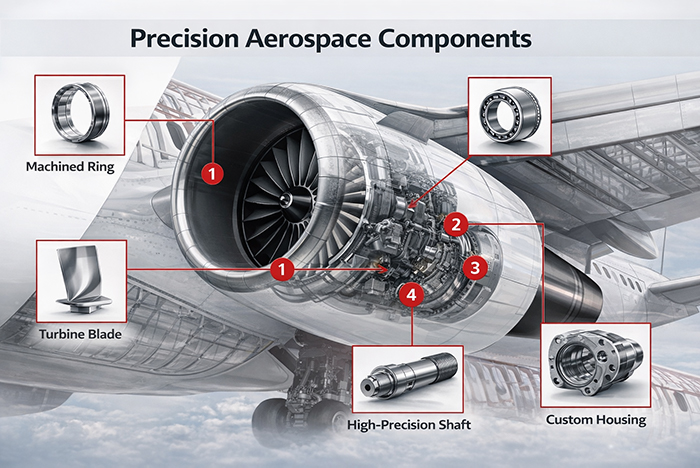
In aerospace manufacturing, even a small error can lead to costly rework or failed parts. At the same time, you’re dealing with complex geometries, tough materials, and tight deadlines.
That’s why machine tools are critical. They directly impact your precision, efficiency, and overall production reliability.
In this article, we’ll look at how machine tools support aerospace manufacturing and why choosing the right equipment matters.

In aerospace manufacturing, precision is not just a requirement—it’s a baseline. Many components must meet micron-level tolerances, especially in critical systems such as engines and structural assemblies. Even the smallest deviation can affect performance, lead to assembly issues, or result in part rejection.
This means machine tools must deliver consistent accuracy over long production cycles, not just one-time precision. Stability, repeatability, and thermal control all play a crucial role in maintaining this level of performance.
Aerospace components are rarely simple. From curved surfaces to deep cavities and thin-walled structures, many parts require multi-angle and multi-surface machining.
Traditional 3-axis machines often struggle to handle these requirements efficiently. That’s why advanced machine tools—especially 5-axis machining centers—are widely used, allowing complex parts to be completed in a single setup, reducing repositioning errors and improving overall accuracy.
Materials used in aerospace, such as titanium alloys, Inconel, and composite materials, are known for their strength—and their machining difficulty.
These materials generate high cutting forces and heat, which can quickly lead to tool wear, deformation, or poor surface quality. To handle this, machine tools must offer:
High rigidity to resist vibration
Powerful spindles for stable cutting
Efficient cooling systems to manage heat
Without the right equipment, machining these materials becomes inefficient and costly.
In aerospace, there is no margin for error. Every component must meet strict quality standards because failure is not an option.
This places higher demands on machine tools—not only in terms of precision, but also process reliability and consistency. Manufacturers need machines that can maintain performance across batches, reduce variability, and support strict inspection requirements.
Beyond technical challenges, aerospace manufacturers are also under constant pressure to improve efficiency and control costs.
Complex parts, long machining times, and expensive materials mean that any inefficiency—such as excessive setups, tool wear, or scrap—can significantly increase production costs.
Advanced machine tools help address this by enabling:
Fewer setups through multi-axis machining
Faster cutting with optimized spindle performance
Reduced scrap through higher accuracy
Ultimately, the right machine tool doesn’t just improve machining—it directly impacts your profitability.
Different aerospace components require different machining solutions. From small precision parts to large structural components, manufacturers rely on a range of advanced machine tools to achieve the required accuracy and efficiency.
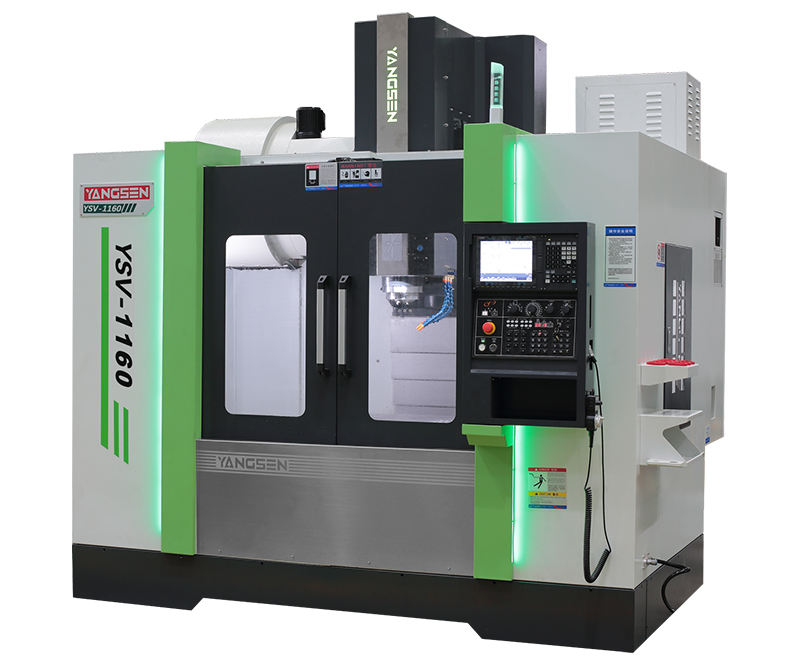
Vertical machining centers are widely used for small to medium-sized aerospace components, especially parts that require high-speed machining and fine surface finishes.
They are ideal for machining:
Aluminum structural parts
Brackets and housings
Precision components with relatively simple geometries
VMCs offer strong versatility and are often used in early-stage production or for parts that do not require complex multi-angle machining. With high-speed spindles and stable structures, they can deliver both efficiency and precision.

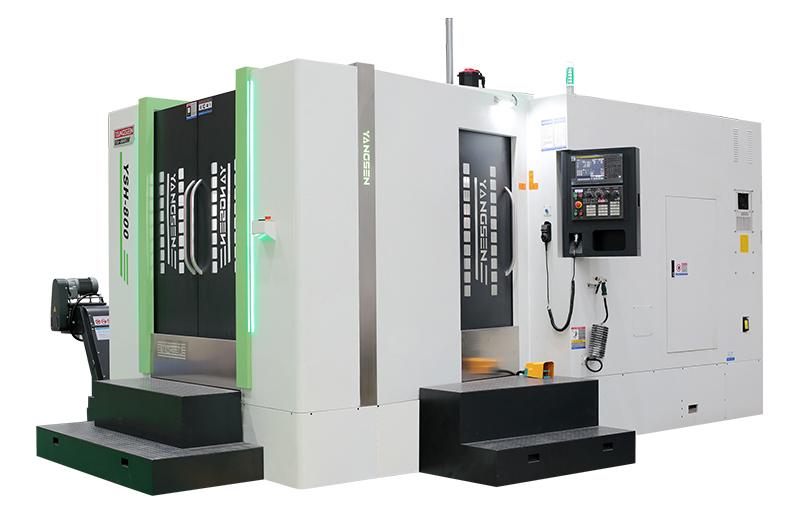
Horizontal machining centers are better suited for complex structural parts and batch production.
Their main advantage lies in multi-face machining. With a horizontal spindle and pallet system, HMCs can process multiple sides of a workpiece in one setup, which significantly reduces repositioning time and improves consistency.
They are commonly used for:
Gearbox housings
Structural frames
Complex cavity components
For aerospace manufacturers looking to improve throughput while maintaining precision, HMCs are often a preferred choice.

5-axis machining centers are considered essential equipment in modern aerospace manufacturing.
They allow simultaneous movement across multiple axes, enabling the machining of highly complex geometries in a single setup. This is especially important for parts with curved surfaces and tight tolerance requirements.
Typical applications include:
Turbine blades
Impellers
Complex aerospace structural components
By reducing multiple setups to one, 5-axis machines not only improve accuracy but also significantly shorten production time.
Not all aerospace parts are prismatic. Many components—especially in engines—require rotational machining.
CNC lathes and turning centers are used for:
Shafts
Discs
Cylindrical engine components
These machines provide high precision in diameter control and surface finish, making them critical for parts that must operate under high speed and stress.
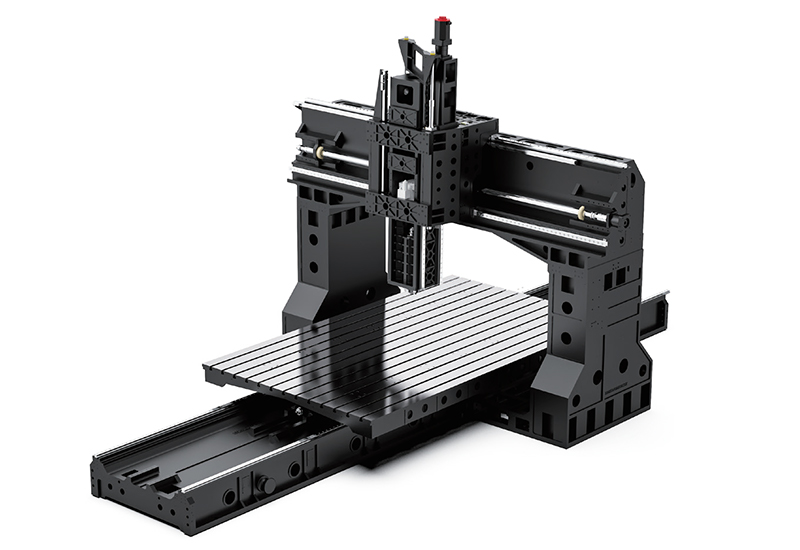
For large aerospace components, standard machines are simply not enough. Gantry and double-column machining centers are designed to handle large, heavy workpieces with high rigidity and stability.
They are typically used for:
Aircraft frames
Wing structures
Large plates and structural parts
With a robust structure and long travel ranges, these machines ensure stable machining even under heavy cutting conditions.
Aerospace manufacturing covers a wide range of components, from large structural parts to highly precise engine components. Each type of part places different demands on machine tools in terms of accuracy, rigidity, and machining capability.
Structural parts form the backbone of an aircraft and are typically large, lightweight, and complex.
These components often include:
Frames
Wing ribs and spars
Fuselage structural parts
They are usually made from aluminum alloys or composite materials and require machining processes that maintain strength while reducing weight.
To achieve this, manufacturers rely on:
Gantry machining centers for large parts
Horizontal machining centers (HMC) for multi-face machining
The key challenge here is maintaining accuracy over large dimensions while ensuring structural integrity.
Engine parts are among the most demanding in aerospace manufacturing. They must withstand high temperatures, pressure, and rotational forces, which means extremely tight tolerances and superior surface quality are required.
Typical components include:
Turbine discs
Blades and impellers
Engine housings
These parts are often made from difficult-to-machine materials such as titanium alloys and high-temperature alloys.
Machining solutions typically involve:
5-axis CNC machining centers for complex geometries
High-rigidity machines for stable cutting
Precision and consistency are critical, as even minor defects can affect engine performance.
Landing gear parts must handle repeated impact loads and extreme stress, making strength and durability the top priorities.
Common parts include:
Shock absorber components
Structural supports
High-strength connecting parts
These components are usually made from high-strength steel or titanium and require heavy-duty machining with excellent surface integrity.
Machine tools used in this area must provide:
High torque output
Strong rigidity
Reliable machining performance under heavy cutting conditions

Not all aerospace parts are large. Many smaller components still require extremely high precision and consistency.
These include:
Brackets
Connectors
Complex small structural parts
Even though the size is smaller, the tolerance requirements remain strict. These parts are often produced in batches, requiring both precision and efficiency.
In aerospace manufacturing, the choice of machine tools directly affects part quality, production efficiency, and overall cost. Advanced CNC machine tools are not just equipment—they are a key factor in staying competitive.
Precision is the foundation of aerospace manufacturing, but consistency is what truly matters in production.
CNC machine tools ensure that every part is produced with the same level of accuracy, even across long production runs. With advanced control systems and stable machine structures, manufacturers can maintain tight tolerances without constant manual adjustment.
This not only reduces the risk of part rejection but also improves assembly reliability, especially for components that must fit perfectly with others.
Aerospace components are becoming more complex, with curved surfaces, deep cavities, and multi-angle features.
CNC machine tools—especially 5-axis systems—allow these parts to be machined in a single setup. This eliminates the need for repeated repositioning, which is a common source of errors.
As a result, manufacturers can achieve:
Higher accuracy
Better surface quality
More efficient machining processes
For complex aerospace parts, this capability is not optional—it’s essential.
Efficiency is a major challenge in aerospace machining, where cycle times are often long, and materials are expensive.
CNC machine tools help improve efficiency by:
Reducing setup time through multi-axis machining
Enabling continuous operation with automation
Optimizing cutting performance with high-speed spindles
By shortening production cycles and minimizing downtime, manufacturers can significantly increase output without compromising quality.
Manual machining introduces variability, especially when dealing with complex parts or tight tolerances.
CNC systems automate the machining process based on programmed instructions, ensuring repeatable and predictable results. This reduces dependence on operator skill and minimizes the chances of costly mistakes.
Surface quality is critical for many aerospace components, especially those exposed to high stress or airflow.
Advanced CNC machine tools provide:
Stable cutting conditions
Precise tool paths
Controlled machining environments
This results in better surface finishes and more consistent part quality, reducing the need for secondary processing.
Aerospace machining is known for its difficulty. From hard materials to complex geometries, manufacturers face multiple challenges that directly affect efficiency, cost, and part quality. The right machine tools play a critical role in solving these issues.
Aerospace components are often made from titanium alloys, high-temperature alloys, and other advanced materials. These materials are strong and heat-resistant—but also extremely difficult to machine.
They tend to generate high cutting forces and excessive heat, which can lead to:
Rapid tool wear
Poor surface finish
Reduced machining stability
How machine tools solve this:
Advanced CNC machines provide:
High-rigidity structures to minimize vibration
High-torque spindles for stable cutting
Efficient cooling systems to control heat
These features make it possible to machine tough materials more efficiently while extending tool life.
Many aerospace parts feature curved surfaces, deep cavities, and intricate internal structures. Machining these geometries using traditional methods often requires multiple setups, increasing the risk of errors.
The challenge:
Repositioning leads to alignment errors
Increased setup time reduces efficiency
How machine tools solve this:
Multi-axis CNC machines, especially 5-axis machining centers, allow:
Simultaneous multi-angle machining
Completion of complex parts in a single setup
This significantly improves accuracy while reducing machining time.
Aerospace parts often require extremely tight tolerances. Even small deviations can result in part rejection or performance issues.
The challenge:
Maintaining precision over long machining cycles
Ensuring consistency across batches
How machine tools solve this:
Modern machine tools offer:
High-precision control systems
Thermal stability to reduce deformation
Consistent repeatability in production
These capabilities ensure that parts meet strict aerospace standards.
Heat is one of the biggest challenges in aerospace machining, especially when working with hard materials.
Excessive heat can cause:
Tool damage
Dimensional inaccuracies
Surface defects
How machine tools solve this:
Advanced CNC machines integrate:
High-performance cooling systems
Optimized cutting parameters
Stable machining environments
This helps control temperature and maintain machining quality.
Aerospace materials are expensive, and machining processes are time-consuming. Any mistake—whether due to setup errors or machine instability—can lead to significant losses.
The challenge:
High scrap costs
Low margin for error
How machine tools solve this:
Reliable machine tools reduce risk by providing:
Stable machining performance
Automated processes that minimize human error
Consistent part quality
This helps manufacturers reduce scrap rates and improve overall cost control.
Why is 5-axis machining important in aerospace?
5-axis machining allows complex parts to be completed in a single setup. This reduces repositioning errors, improves accuracy, and shortens production time—making it essential for components with complex geometries such as turbine blades and structural parts.
What materials are most challenging in aerospace machining?
Common aerospace materials such as titanium alloys, Inconel, and high-strength steels are difficult to machine due to their hardness and heat resistance. These materials require machines with high rigidity, strong spindle performance, and effective cooling systems.
How precise do aerospace CNC machines need to be?
Aerospace machining often requires micron-level precision, along with high repeatability across batches. More importantly, machines must maintain this accuracy consistently over long production cycles.
What are the main challenges in aerospace machining?
Key challenges include machining difficult materials, handling complex geometries, maintaining tight tolerances, and controlling heat and tool wear. These factors can significantly impact both quality and production cost.
How can the right machine tool improve production efficiency?
The right machine tool can reduce setup time, improve machining stability, and enable more efficient processing through multi-axis capabilities and automation. This leads to faster production cycles and lower overall costs.
Machine tools play a fundamental role in aerospace manufacturing, enabling the production of complex, high-precision components while maintaining efficiency and consistency.
As materials become harder to machine and part designs more complex, the demand for advanced CNC solutions continues to grow. Choosing the right machine tool is no longer just a technical decision—it directly affects production stability, cost control, and long-term competitiveness.
If you are looking to improve your aerospace machining capabilities, working with the right machine tool partner can make a significant difference.