博客

Complete Guide to Types of CNC Machining Processes

Aug 10, 2026

Computer Numerical Control (CNC) machining is a manufacturing process that uses computer-controlled machines to remove material from a workpiece with high precision. Today, it is one of the most widely used production methods because it delivers consistent quality, tight tolerances, and faster manufacturing.

However, CNC machining is not a single process. Different machining operations are designed for different materials, part geometries, accuracy requirements, and production volumes. Choosing the right process helps improve machining efficiency and part quality. In this blog, you will learn what CNC machining is, why different CNC machining processes exist, and the most common types used across modern manufacturing industries.


What Is CNC Machining?

CNC machining is a subtractive manufacturing process that removes material from a solid workpiece using computer-controlled machine tools. Unlike manual machining, where operators control the machine by hand, CNC machines follow programmed instructions to perform cutting operations automatically.

This allows manufacturers to produce parts with high accuracy, repeatability, and consistent quality. CNC machining is widely used because it improves productivity, reduces human error, and can machine a wide range of materials, including metals, plastics, and composites.


Main Types of CNC Machining Processes

CNC machining includes several processes, each designed for specific manufacturing requirements. The selection of a machining method depends on factors such as part design, material type, required accuracy, and production needs. Some processes are used for creating complex shapes, while others focus on producing precise holes, improving surface finish, or manufacturing cylindrical components. The most common CNC machining processes include milling, turning, drilling, and boring.


CNC Milling


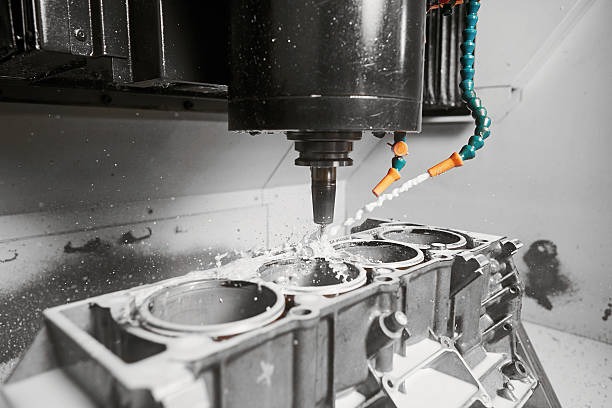
CNC Milling 


CNC milling is one of the most widely used CNC machining processes. It uses rotating multi-point cutting tools to remove material from a stationary workpiece, thereby creating the required shape and features.

During milling, the cutting tool moves along different axes while removing material from the workpiece. CNC milling machines can perform operations such as face milling, slotting, pocketing, and contouring, making them suitable for producing complex geometries.

Advantages of CNC Milling:

  • Produces highly accurate and complex components
  • Suitable for a wide range of materials
  • Provides excellent repeatability for mass production
  • Can create multiple features in a single setup

CNC milling is commonly used for manufacturing aerospace components, automotive parts, molds, machine housings, brackets, and precision mechanical components.


CNC Turning


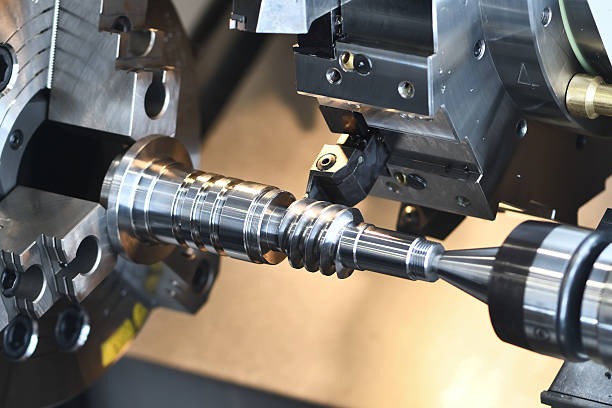
 CNC Turning


CNC turning is a machining process where the workpiece rotates while a stationary cutting tool removes material from its surface. It is mainly used to produce cylindrical and round components with high precision.

The cutting tool moves along the length of the rotating workpiece to remove excess material until the desired shape and dimensions are achieved. CNC turning machines can perform operations such as facing, threading, grooving, and boring.

Advantages of CNC Turning:

  • High accuracy for cylindrical parts
  • Faster production for repeated components
  • Excellent surface finish
  • Suitable for high-volume manufacturing

CNC turning is widely used in industries such as automotive, aerospace, medical equipment, and general machinery manufacturing.


CNC Drilling


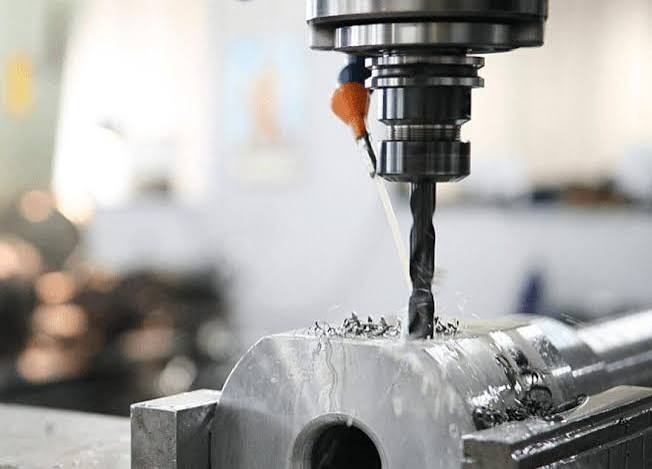
CNC Drilling 


CNC drilling is a machining process used to create precise holes in a workpiece using computer-controlled drill bits. The machine controls the drilling position, depth, and speed to achieve accurate results.

Depending on the application, CNC drilling can create different types of holes, including through holes, blind holes, tapped holes, and deep holes. Advanced CNC drilling machines can also perform angled drilling operations.

Common Types of CNC Drilling Operations:

  • Through holes
  • Blind holes
  • Counterbores
  • Countersinks
  • Threaded holes

CNC drilling is widely used in aerospace, automotive, electronics, construction, and manufacturing industries where accurate holes are required for assembly and component functionality.


CNC Boring

CNC boring is a machining process used to enlarge and improve the accuracy of existing holes created by drilling or casting. It uses a single-point cutting tool to remove small amounts of material from the inside surface of a hole.

The main purpose of boring is to achieve precise hole dimensions, better alignment, improved roundness, and smoother internal surfaces. CNC boring is especially useful when tight tolerances are required.

Advantages of CNC Boring:

  • Improves hole accuracy and alignment
  • Achieves tight dimensional tolerances
  • Produces high-quality internal finishes
  • Corrects inaccuracies from previous machining operations

CNC boring is commonly used for manufacturing engine cylinders, bearing housings, hydraulic components, gear housings, and other precision mechanical parts.


CNC Grinding

CNC grinding is a precision machining process that uses an abrasive grinding wheel to remove small amounts of material from a workpiece. It is mainly used as a finishing operation to achieve extremely smooth surfaces and accurate dimensions.

During the grinding process, the rotating abrasive wheel gradually removes material while the CNC system controls movement and positioning. This allows manufacturers to achieve tight tolerances that are difficult to obtain with conventional machining methods.

Advantages of CNC Grinding:

  • Produces excellent surface finishes
  • Achieves high dimensional accuracy
  • Suitable for hardened and difficult-to-machine materials
  • Improves part consistency in high-volume production

CNC grinding is widely used in aerospace, automotive, medical, tool and die, and precision manufacturing industries. Common applications include bearings, shafts, molds, cutting tools, and other components requiring high accuracy.


CNC Laser Cutting


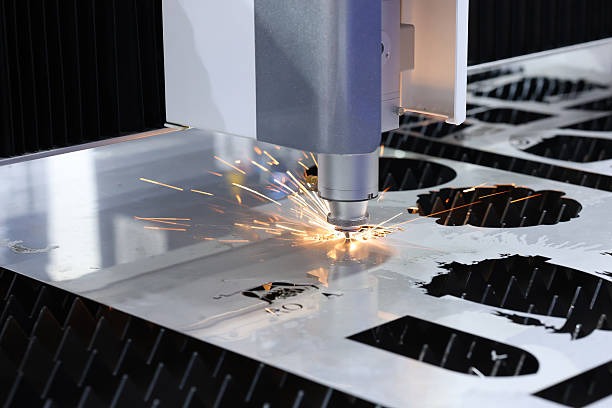
 CNC Laser Cutting


CNC laser cutting is a thermal machining process that uses a high-powered laser beam to cut, engrave, or mark materials with high precision. During the process, the focused laser beam generates intense heat that melts or vaporizes the material along a programmed cutting path. The CNC system controls the movement of the laser to produce accurate shapes and designs.

Advantages of CNC Laser Cutting:

  • Provides fast and accurate cutting
  • Creates clean edges with minimal finishing
  • Suitable for complex designs
  • Reduces material waste

CNC laser cutting is widely used in industries such as automotive, electronics, aerospace, signage, and sheet metal fabrication.


CNC Plasma Cutting

CNC plasma cutting is a thermal cutting process that uses a high-temperature plasma arc to cut electrically conductive materials. The plasma arc melts the material while a high-speed gas stream removes the molten metal from the cutting area. This process is mainly used for cutting thick metal sheets and plates where high cutting speed and efficiency are required.

Advantages of CNC Plasma Cutting:

  • Fast cutting speed for thick materials
  • Suitable for large-scale fabrication
  • Handles heavy-duty cutting applications
  • Lower operating cost compared to some other cutting methods

CNC plasma cutting is commonly used in heavy fabrication industries, including construction, shipbuilding, automotive manufacturing, and structural steel production.


CNC Waterjet Cutting


CNC Waterjet Cutting


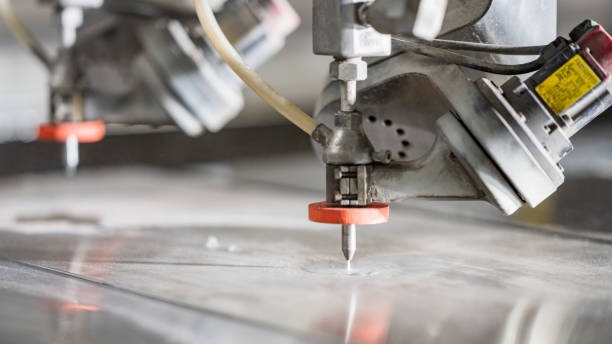
CNC waterjet cutting is a cold cutting process that uses a high-pressure stream of water, often mixed with abrasive particles, to cut through different materials. Unlike thermal cutting methods, it does not generate heat during the cutting process. There is no heat-affected zone; waterjet cutting is ideal for materials that may be damaged by high temperatures.

Advantages of CNC Waterjet Cutting:

  • No thermal distortion or heat damage
  • Cuts a wide range of materials
  • Produces accurate and clean edges
  • Suitable for thick materials

CNC waterjet cutting is commonly used in aerospace, automotive, construction, stone processing, and composite manufacturing industries.


CNC Milling vs CNC Turning

CNC milling and CNC turning are two of the most common machining processes used in modern manufacturing. Although both use computer-controlled machines to remove material, they work differently and are suitable for different types of components.

Feature

CNC Milling

CNC Turning

Working Principle

Rotating cutting tools remove material from a stationary workpiece

A rotating workpiece is cut by a stationary tool

Best For

Complex shapes, slots, pockets, and flat surfaces

Cylindrical parts and rotational components

Tool Movement

Cutting tool moves along multiple axes

Cutting tool moves linearly along the rotating part

Common Parts

Housings, brackets, molds, aerospace components

Shafts, bolts, bushings, pins, threaded parts

Accuracy

High precision for complex geometries

High precision for cylindrical components

Machine Type

CNC milling machines and machining centers

CNC lathes and turning centers


How to Choose the Right CNC Machining Process?

Choosing the right CNC machining process depends on several factors, including the material, part design, accuracy requirements, production needs, and budget. The correct process helps manufacturers achieve better quality, efficiency, and cost control.


Material

The type of material being machined plays an important role in process selection. Soft materials such as aluminum and plastics can often be machined using standard milling and turning operations, while harder materials like titanium, hardened steel, and advanced alloys may require specialized processes such as EDM or grinding.


Part Geometry

The shape and complexity of the component determine which machining method is most suitable. CNC turning is ideal for cylindrical parts, while CNC milling is better for components with complex features, pockets, and irregular shapes. Processes like EDM and laser cutting are useful for intricate designs and fine details.


Required Accuracy

Different applications require different levels of precision. For parts with tight tolerances, processes such as CNC grinding, EDM, or precision milling may be preferred. Selecting a process capable of meeting the required accuracy helps prevent defects and reduces additional finishing work.


Surface Finish

Surface finish requirements also influence machining selection. Some processes naturally produce smoother surfaces, while others may require secondary finishing operations. Grinding, honing, and lapping are commonly used when extremely smooth finishes are required.


Production Volume

Production quantity affects the choice of CNC process. High-volume manufacturing often benefits from automated CNC turning centers, milling machines, and production-focused machining systems. For prototypes or low-volume parts, flexible machining methods may be more suitable.


Cost

Cost considerations include machine time, tooling, material waste, labor, and finishing requirements. The most suitable CNC machining process is not always the cheapest option initially; it should provide the right balance between production efficiency, quality, and overall manufacturing cost.


Conventional CNC Machining vs Non-Traditional CNC Machining 

CNC machining processes can be divided into two main categories: conventional and non-traditional machining. The main difference between them is how material is removed from the workpiece, as given below.

Feature

Conventional CNC Machining

Non-Traditional CNC Machining

Material Removal Method

Uses mechanical cutting tools

Uses electrical, thermal, chemical, or abrasive energy

Tool Contact

Direct contact between tool and workpiece

May involve no direct physical contact

Common Processes

Milling, turning, drilling, grinding

EDM, laser cutting, waterjet cutting, ECM

Suitable Materials

Metals, plastics, composites, and general materials

Hard alloys and difficult-to-machine materials

Accuracy

High accuracy for standard applications

Extremely precise for complex features

Applications

General manufacturing and production parts

Aerospace, medical, mold making, and specialized components


FAQs

1. What is the most common CNC machining process?

CNC milling and CNC turning are considered the most common CNC machining processes. Milling is widely used for complex shapes and features, while turning is mainly used for cylindrical components.

2. CNC milling vs turning: Which is better?

Neither process is universally better. CNC milling is ideal for complex geometries, flat surfaces, and pockets, while CNC turning is better for round and cylindrical parts.

3. Which CNC machining process is the most accurate?

The accuracy of a CNC process depends on the machine type, material, tooling, and application. Processes such as CNC grinding and EDM are commonly used when extremely tight tolerances are required.

4. Can one CNC machine perform multiple operations?

Yes. Advanced CNC machining centers can perform multiple operations, including milling, drilling, boring, and tapping, in a single setup. This reduces setup time and improves efficiency.

5. Which materials can CNC machines process?

CNC machines can process a wide range of materials, including aluminum, steel, stainless steel, titanium, brass, plastics, composites, and other engineered materials.

6. Is CNC machining suitable for small production runs?

Yes. CNC machining is suitable for prototypes, small batches, and large-scale production. Its flexibility allows manufacturers to produce both single components and high-volume parts.


Conclusion

CNC machining includes a wide range of processes, and each method is designed to solve specific manufacturing challenges. From milling and turning to EDM, laser cutting, and waterjet machining, every process offers unique advantages depending on the material, part design, required accuracy, surface finish, and production requirements.

At Yangsen, we provide advanced CNC machining solutions designed to meet different industrial requirements. Whether you need high-precision components, complex geometries, or reliable production support, our team can help you choose the right machining solution for your application. Contact Yangsen today to discuss your CNC machining needs and find the best solution for your project

Send Inquiry Now

留言

留言
如果您对我们的产品感兴趣,想了解更多详情,请在这里留言,我们会尽快回复您。
提交

产品

whatsApp

接触