博客

Fixed Gantry vs Moving Gantry CNC

Jun 05, 2026

Fixed gantry and moving gantry are two of the most common structural designs used in CNC machining systems. Both configurations are designed to deliver accurate machining performance, but they differ significantly in terms of machine structure, workpiece handling, rigidity, and production capabilities. In a fixed gantry machine, the gantry remains stationary while the worktable moves during machining.

In a moving gantry machine, the worktable stays fixed while the gantry travels across the machining area. These structural differences affect machining precision, material capacity, machine footprint, productivity, and overall suitability for the application. Understanding these differences helps manufacturers select the most appropriate CNC solution for their production requirements.


What is Fixed Gantry?


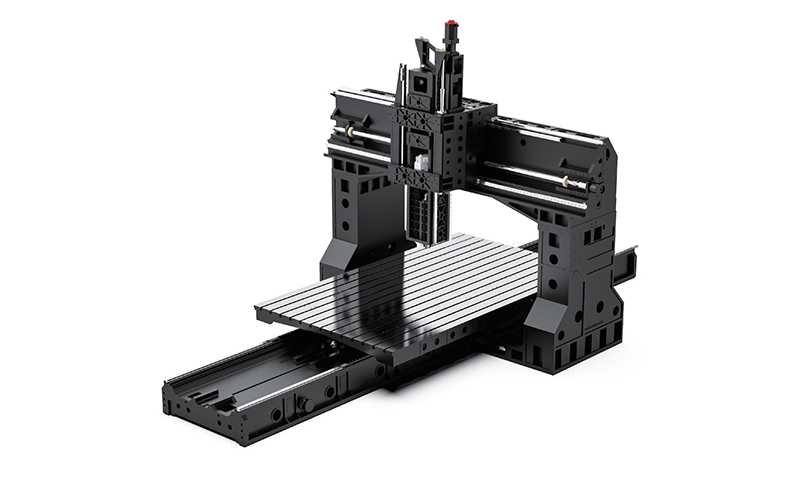
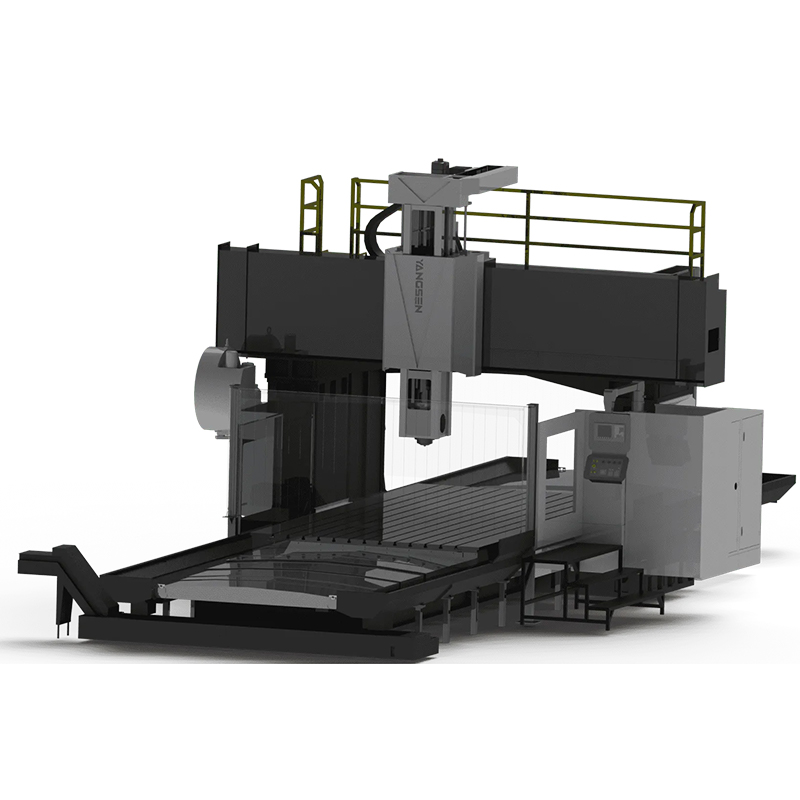
A fixed gantry CNC machine features a stationary gantry structure, with the bridge remaining fixed in position during machining operations. In this configuration, the worktable moves beneath the gantry while the spindle performs cutting operations along multiple axes.

Unlike moving gantry systems, the workpiece itself moves along the machine bed during machining. This design minimizes movement in the upper machine structure and allows the spindle assembly to maintain greater stability during heavy cutting applications. Fixed gantry CNC machines are commonly used in industries that require high rigidity, tight tolerances, and superior surface finishing.


Types of Fixed Gantry

Fixed gantry CNC machines are available in different configurations to meet various machining requirements. The selection of a particular type depends on factors such as workpiece size, material type, production volume, and required machining precision.

Single-Column Fixed Gantry

Single-column fixed gantry machines are designed for lighter machining applications and smaller workpieces. These machines typically offer a compact footprint while maintaining good rigidity and accuracy. They are often used in workshops and manufacturing facilities that process medium-sized components and require cost-effective machining solutions.

Double-Column Fixed Gantry

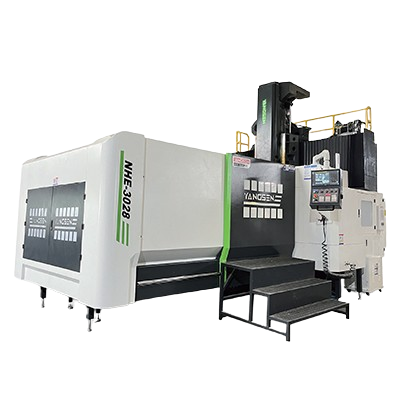
Double-column gantry machines are among the most common configurations used in industrial manufacturing. The dual-column structure provides superior support to the stationary gantry, significantly improving machine rigidity and stability. These machines are ideal for heavy-duty machining operations, large molds, and precision metal cutting applications.

High-Speed Fixed Gantry

High-speed fixed gantry CNC machines are specifically designed for applications that require fast machining cycles without sacrificing accuracy. These machines incorporate advanced servo systems, lightweight spindle assemblies, and optimized motion control technologies to achieve higher productivity while maintaining excellent precision.

Heavy-Duty Fixed Gantry

Heavy-duty fixed gantry machines are built for machining large and difficult materials such as steel, cast iron, and industrial alloys. Their reinforced machine frames and powerful spindle systems allow them to handle aggressive cutting conditions while maintaining long-term stability and reliability.


Structure of Fixed Gantry

The structure of a fixed gantry CNC machine is built for high rigidity and stable machining performance. In this design, the gantry remains fixed on the machine frame while the worktable moves during operation, ensuring controlled and precise cutting.

The machine base is usually made from cast iron or welded steel, providing strong vibration resistance and long-term stability. The stationary gantry is firmly mounted on both sides of the bed, which reduces structural movement and improves machining accuracy. The worktable moves along precision guideways with servo-driven control to maintain smooth and accurate positioning. Modern systems also include advanced CNC controls and spindle units for better efficiency.


Why Choose Fixed Gantry?

Here are a few reasons that we are choosing a fixed gantry:

  • High machining accuracy due to the rigid and stable machine structure
  • Excellent vibration control, improving cutting consistency and surface finish
  • Suitable for heavy-duty machining of hard metals and large industrial parts
  • Tight tolerance capability for precision industries like aerospace and mold making
  • Long tool life because of reduced vibration and stable cutting conditions
  • Reliable long-term performance for continuous industrial production


Advantages and Disadvantages of Fixed Gantry

Advantages of Fixed Gantry

Disadvantages of Fixed Gantry

Excellent structural rigidity and vibration resistance

Limited ability to handle extremely oversized workpieces

Superior machining accuracy and tighter tolerances

Larger floor space requirements due to the moving table travel

Ideal for heavy-duty cutting and hard material machining

Less flexible for extra-long sheet processing

Improved surface finish quality and cutting consistency

Heavy table movement can create additional inertia

Longer tool life due to stable cutting conditions

Machine size can increase significantly for large work areas

Reduced structural wear on gantry components

Generally, higher installation space requirements

Reliable long-term performance in industrial environments

May not be as efficient as moving gantry systems for large-format production


What is a Moving Gantry


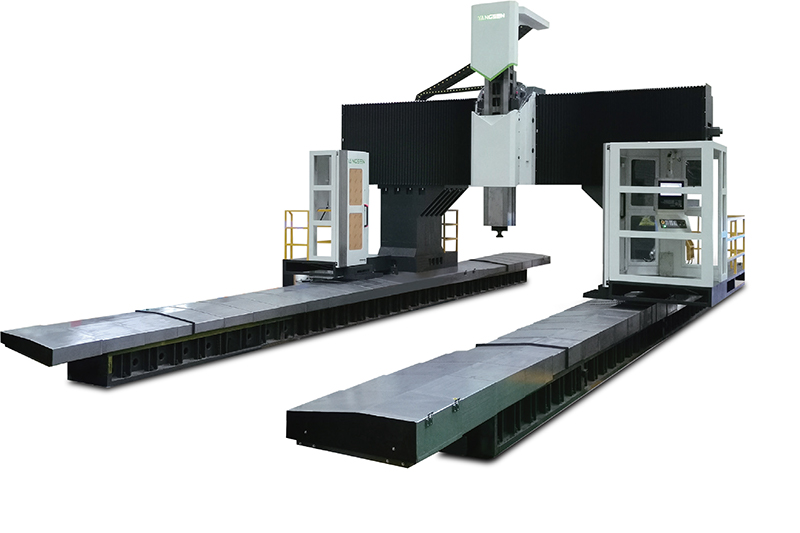
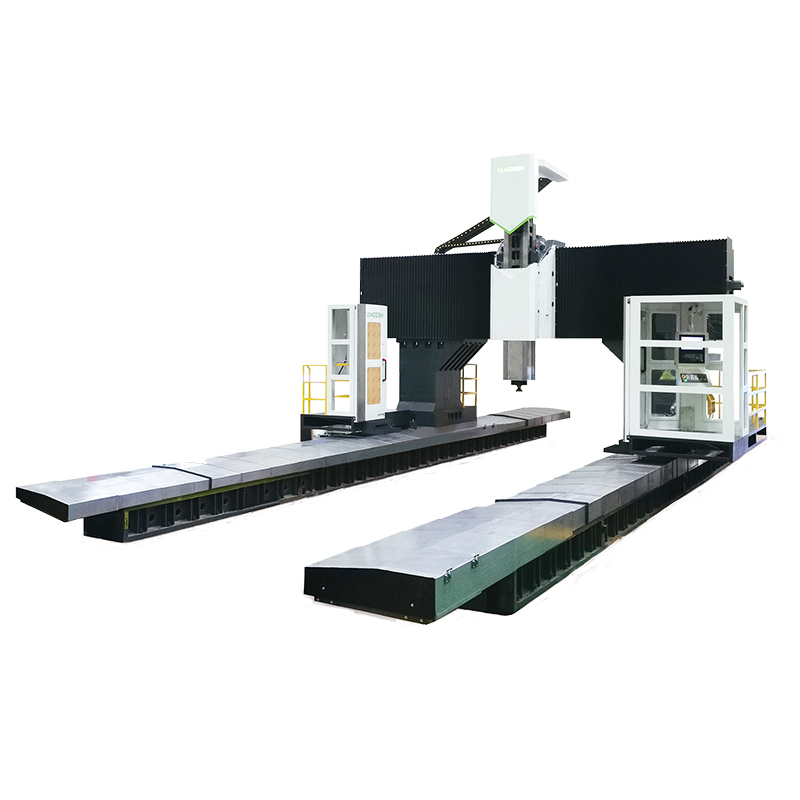
A moving gantry CNC machine is a machining system in which the gantry travels across a stationary worktable during operation, while the workpiece remains fixed in position. This design is widely used in industries that require large-format machining and flexible material handling. Unlike fixed gantry systems, the structural movement is focused on the gantry itself, which allows the machine to cover a wider machining area without requiring table movement. This makes moving gantry machines highly suitable for processing oversized sheets, long panels, and large industrial components with efficiency and stability.


Types of Moving Gantry

Moving gantry CNC machines are available in several configurations depending on production requirements and machining scale. Each type is designed to balance speed, rigidity, and workspace flexibility.

Light-Duty Moving Gantry

Light-duty systems are used for smaller production tasks such as woodworking, signage, and light fabrication. They offer fast operation and cost-effective performance for non-heavy machining applications.

Industrial Moving Gantry

Industrial-grade moving gantry machines are built for continuous production environments. They feature stronger frames, improved guideways, and higher load capacity, making them suitable for metal processing, aerospace parts, and composite materials.

High-Speed Moving Gantry

These machines are designed for rapid production cycles. They use advanced servo systems and optimized motion control to achieve fast cutting speeds while maintaining acceptable accuracy for large-scale manufacturing.

Extra-Large Moving Gantry

Extra-large configurations are used for oversized materials such as shipbuilding components, large aluminum panels, and structural parts. These machines offer extended travel lengths and highly scalable design options.


Structure of Moving Gantry

The structure of a moving gantry CNC machine is designed to maximize working area flexibility and material handling efficiency. In this system, the worktable remains completely stationary, while the gantry moves along the X-axis to perform machining operations.

The machine bed provides a stable foundation that supports heavy and oversized workpieces without movement. The gantry, mounted on precision linear guideways, travels smoothly across the machining area and carries the spindle assembly for cutting operations. This reduces the need for moving large materials during machining, improving handling efficiency.


Why Choose Moving Gantry?

Moving gantry CNC machines are widely preferred in industries where large workpieces and flexible production. Here are the main reasons for choosing a moving gantry.

  • Ideal for machining large and oversized materials because the worktable remains fixed.
  • Improves production efficiency by allowing easy loading and unloading of heavy workpieces.
  • Suitable for industries requiring continuous and high-volume production workflows.
  • Offers flexible machining capability for different material types and sizes.
  • More practical for space management in facilities where large moving tables are not suitable.
  • Supports automated production systems for faster and smoother manufacturing processes.
  • Widely used in woodworking, signage, aerospace, and fabrication industries for large-format work.


Advantages and Disadvantages of Moving Gantry

Advantages of Moving Gantry

Disadvantages of Moving Gantry

Excellent for large and oversized workpieces

Slightly lower rigidity compared to the fixed gantry

Easy material loading due to the stationary table

Vibration may increase during heavy cutting

Better space efficiency in many factory layouts

Reduced stability at very high machining speeds

High productivity for large-scale production

Requires more maintenance of moving components

Suitable for continuous industrial workflows

Slight limitations in ultra-high precision applications

Flexible for multiple industries and materials

Cutting performance can vary under heavy load conditions

Scalable design for extra-large machining needs

Not always ideal for very tight tolerance machining


Main differences between Fixed Gantry and Moving Gantry

Fixed gantry and moving gantry CNC machines differ in several important aspects, such as structure, performance behavior, cost, and maintenance requirements. These differences directly affect how each machine performs in real industrial applications and help manufacturers decide which system best fits their production needs.


Structure and Design

Fixed gantry CNC machines are built with a stationary bridge structure where the gantry remains fixed while the worktable moves during machining. This design provides high rigidity and excellent stability. In contrast, moving gantry CNC machines use a stationary worktable while the gantry moves across the machining area. This allows better handling of large sheets and oversized workpieces.


Compatibility

Fixed gantry systems are more compatible with precision machining tasks, small to medium workpieces, and heavy cutting applications. They are widely used in industries requiring tight tolerances, such as mold making and aerospace.

Moving gantry machines are more compatible with large-scale production, oversized materials, and continuous sheet processing. They are commonly used in woodworking, signage, and large metal fabrication industries.


Price

Fixed gantry CNC machines are generally more expensive in terms of structural build and rigidity-focused design, especially for heavy-duty models. However, they offer long-term value for precision industries.

Moving gantry CNC machines can be more cost-efficient for large-format machining because they are designed for scalability and high production output, reducing cost per unit in mass production environments.


Assembly

Fixed gantry machines usually require a more complex foundation setup because of the heavy base and moving table system. Installation needs proper leveling and space planning.

Moving gantry machines are often easier to assemble in large workshop environments since the table is stationary and the gantry movement system is modular and scalable.


Maintenance

Aspect

Fixed Gantry CNC

Moving Gantry CNC

Maintenance Frequency

Lower, due to fewer moving gantry parts

Higher, because the gantry moves during operation

Mechanical Wear

Reduced wear on the gantry structure

More wear on guideways and drive systems

Lubrication Needs

Moderate and stable requirements

More frequent lubrication is required

Service Complexity

Easier and more predictable maintenance

Slightly more complex maintenance routine

Downtime Risk

Lower downtime in long-term use

Higher chance of scheduled maintenance breaks

Long-Term Durability

Very high due to stable structure

High, but depends on regular maintenance

Replacement of Parts

Less frequent component replacement

More frequent wear-part replacement


How to Choose the One That Best Suits You

Selecting between Fixed Gantry and Moving Gantry CNC machines depends on your production goals, material type, precision requirements, and long-term business planning. Each factor plays an important role in determining the most suitable machine for your application.


Application

The first and most important factor is the type of application. If your work involves high-precision machining, such as mold making, aerospace parts, or heavy metal components, a fixed gantry CNC is more suitable. It delivers superior accuracy and stability.

If your application focuses on large-scale production like woodworking, furniture, signage, or large sheet processing, a moving gantry CNC is the better choice due to its ability to handle oversized materials efficiently.


Compatibility

Compatibility refers to how well the machine supports different materials and production environments. Fixed gantry machines are highly compatible with hard metals, precision parts, and industries requiring tight tolerances. They perform best in controlled, high-accuracy environments.

Moving gantry machines are more compatible with large panels, soft materials, composites, and mass production workflows where size flexibility is important.


Type

Different machine types serve different industrial needs. Fixed gantry machines come in heavy-duty, high-speed, and precision-oriented configurations, making them ideal for demanding machining tasks.

Moving gantry machines are typically designed in open-frame, large-format, or scalable models, allowing manufacturers to customize size and production capacity based on requirements.


Price

Price is another important consideration when choosing a CNC machine. Fixed gantry machines are usually more expensive due to their rigid structure and high-precision engineering components. However, they offer long-term value in precision industries.

Moving gantry machines can be more cost-efficient for large production environments because they are designed for higher throughput and larger work areas.


Budget

Your available budget should match your production goals. If your priority is ultra-precision and long-term industrial reliability, investing in a fixed gantry system is more beneficial.

If you are working with a limited budget but need large-format machining and high productivity, a moving gantry CNC provides better value and scalability.


Maintenance

Maintenance is a critical factor in decision-making. Fixed gantry machines generally require less maintenance because of their stationary structure, which reduces mechanical wear. This results in lower downtime and stable long-term performance, improving ROI in precision-focused industries.

Moving gantry machines require more regular maintenance due to the movement of gantry components and guideways. However, they offer higher production capacity, which can generate faster ROI in high-volume manufacturing environments.

When planning long-term investments, consider not only maintenance costs but also productivity, machine lifespan, and expected output efficiency to determine the best ROI for your business.

FAQ

What is the main difference between fixed gantry and moving gantry CNC machines?

The main difference is the movement structure. In fixed gantry machines, the gantry remains stationary while the worktable moves, whereas in moving gantry machines, the worktable stays fixed and the gantry moves over it.

Which CNC machine offers better precision?

Fixed gantry CNC machines generally provide higher precision due to their rigid structure and reduced vibration during machining.

Which machine is better for large workpieces?

Moving gantry CNC machines are more suitable for large and oversized workpieces because they can handle wider and longer materials without major limitations.

Which CNC type is more cost-effective?

It depends on the application. Fixed gantry machines are more cost-effective for precision work, while moving gantry machines offer better value for large-scale production.

Which machine requires more maintenance?

Moving gantry CNC machines usually require more maintenance because they have more moving components, such as gantry drives and guideways.

Which machine is better for long-term investment?

Both are good long-term investments, but the choice depends on usage. A fixed gantry is better for precision industries, while a moving gantry is better for high-volume production.


Conclusion

Fixed gantry and moving gantry CNC machines both play an important role in modern industrial manufacturing, but their suitability depends entirely on application requirements. Fixed gantry CNC machines are best known for their high rigidity, superior precision, and excellent performance in heavy-duty and accuracy-focused machining tasks.

On the other hand, moving gantry CNC machines excel in handling large workpieces, offering greater flexibility, scalability, and production efficiency for oversized materials. Choosing the right CNC machine depends on factors such as workpiece size, required precision, production speed, and available floor space. Understanding these differences helps manufacturers make better investment decisions and improve overall machining efficiency.

If you are planning to invest in a reliable CNC solution, choose the machine that matches your workflow and future growth needs. CNC Yangsen offers advanced CNC systems designed to deliver performance, precision, and long-term industrial value for every manufacturing requirement.

留言

留言
如果您对我们的产品感兴趣,想了解更多详情,请在这里留言,我们会尽快回复您。
提交

产品

whatsApp

接触